
Sit on a firm, flat surface
Measure while seated on a hard chair — not a soft sofa. Feet flat on the floor, back straight.
Use a cloth tape measure
A soft tape gives more accurate body measurements than a metal one. Have a helper if possible.
Enter measurements below
Results appear on the right as you type. All measurements are in inches.
Your measurements
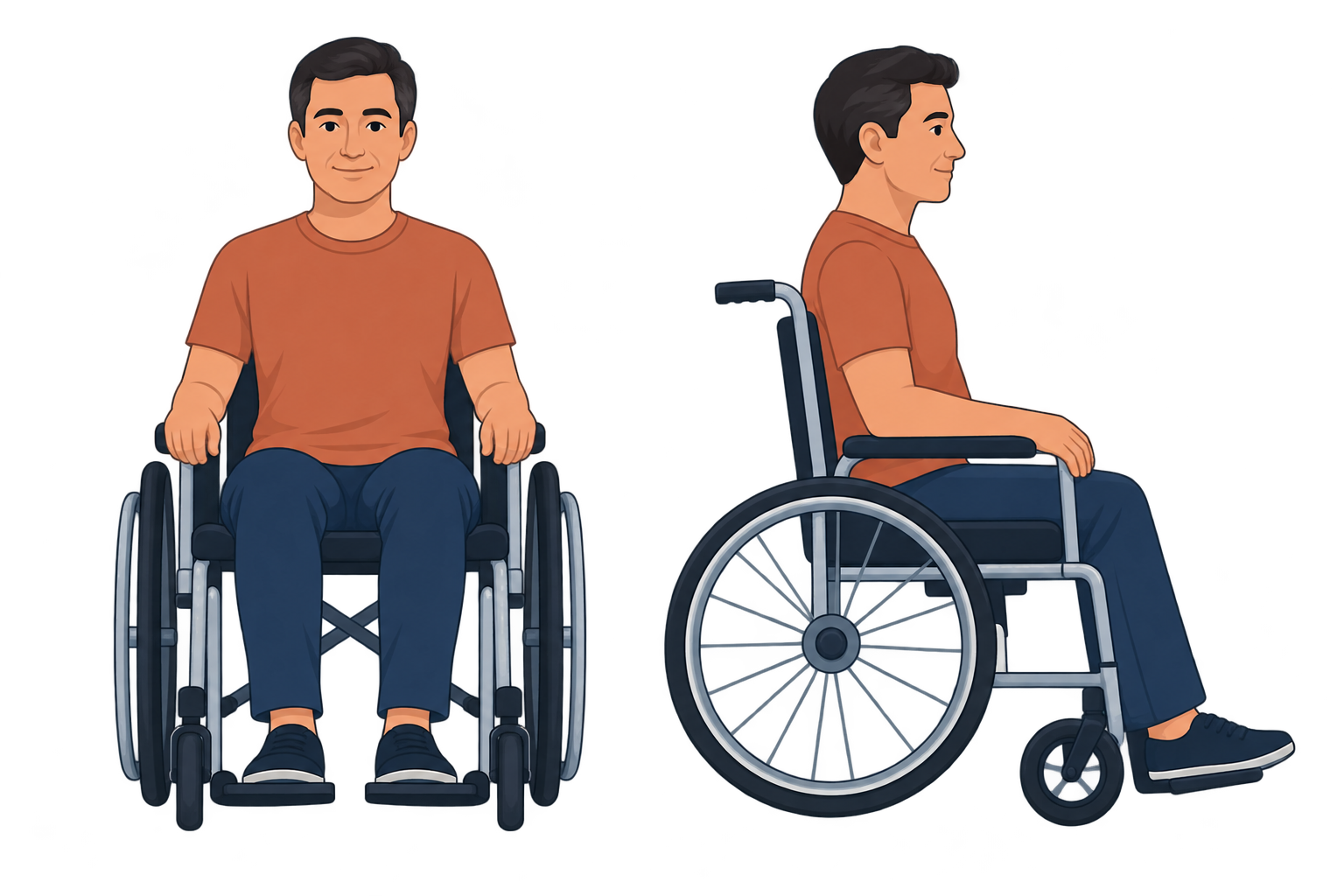
A Widest hip/thigh width
B Back of buttocks → back of knee
C Heel → back of knee
D Seat surface → top of shoulder
Measure the widest part of hips or thighs while seated.
Sit against the back of the chair. Measure from the back to just behind the knee.
From the heel of the foot to the back of the knee, with shoes on. This determines seat-to-floor height.
From the seat surface to the top of the shoulder. Ensures proper posture support without restricting arm movement.
Used to recommend the appropriate weight-capacity frame.
Enter your measurements on the left to see your recommended sizes here.
Why proper sizing matters
A poorly fitted wheelchair affects comfort, posture and safety — often in ways that aren't obvious at first.
Seat width
Too narrow causes pressure sores and restricted circulation. Too wide makes self-propulsion harder and can cause poor posture and shoulder injury over time.
Seat depth
Too deep puts pressure on the back of the knees and encourages slouching. Too shallow doesn't support enough thigh, reducing stability and comfort.
Seat height
A seat that's too low can make transfers difficult and strain hips. Too high prevents feet from resting flat and shifts the center of gravity backward.
Not sure which chair is right?
Our team can walk you through options, check weight capacity, and confirm fit before you commit — at no charge.